
Piano scales: how to organize your practice for jazz improvisation

There are many ways to practice piano scales, but what really matters is practicing them in a way that lets you use them in your jazz improvisation. The traditional way, running up and down four octaves with both hands, helps your technique, but it doesn’t improve your improvising.
In this article we’ll look at a more interesting and effective approach: patterns, using the metronome well, phrasing and ear development.
The classic ways to practice scales
Books usually suggest practicing:
- All major and minor scales (natural, melodic, harmonic), the modes (Ionian, Dorian, Phrygian, Lydian and so on), pentatonics, blues scales, diminished, whole tone and altered scales.
- In all keys and across the whole range of the instrument.
- In contrary motion, one hand going up while the other goes down.
- Going up in one mode (e.g. Ionian) and coming down in another (e.g. Dorian).
- In diatonic 3rds and 4ths, up and down.
- As diatonic triads and seventh chords.
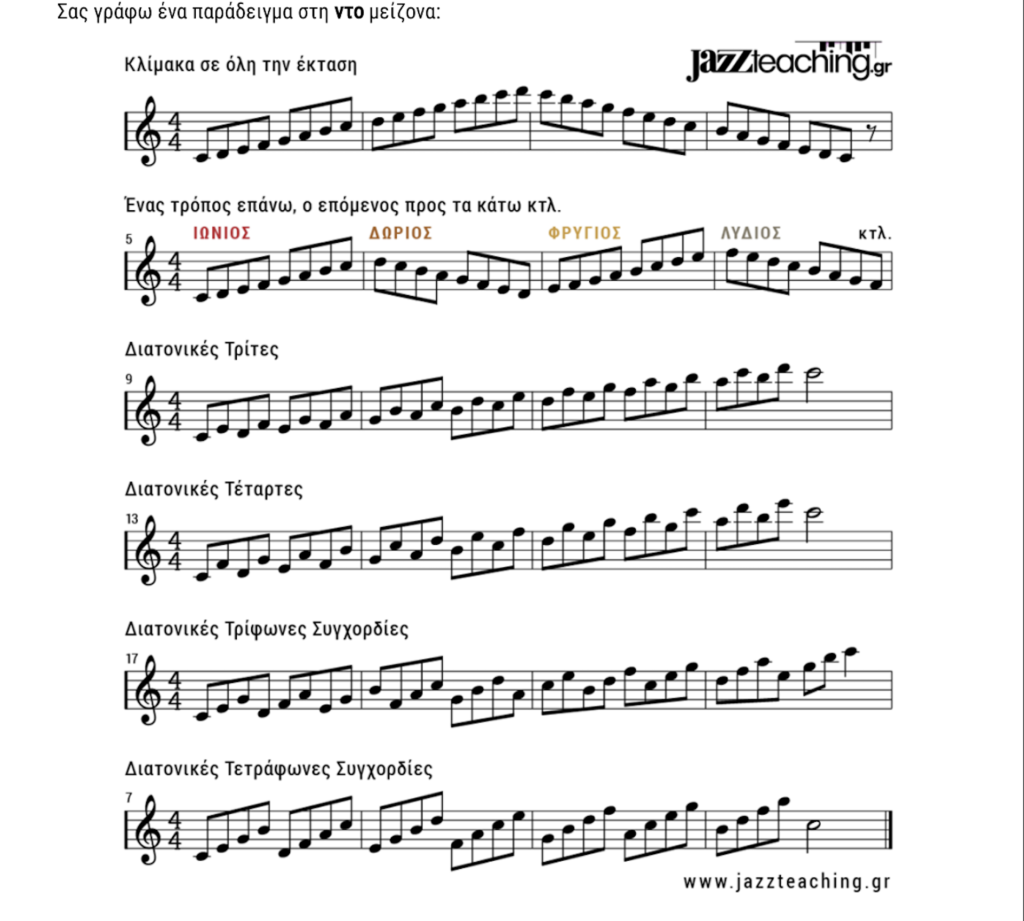
This way is very time-consuming and very hard to apply in every key. Here’s a more interesting approach that comes from my experience teaching.
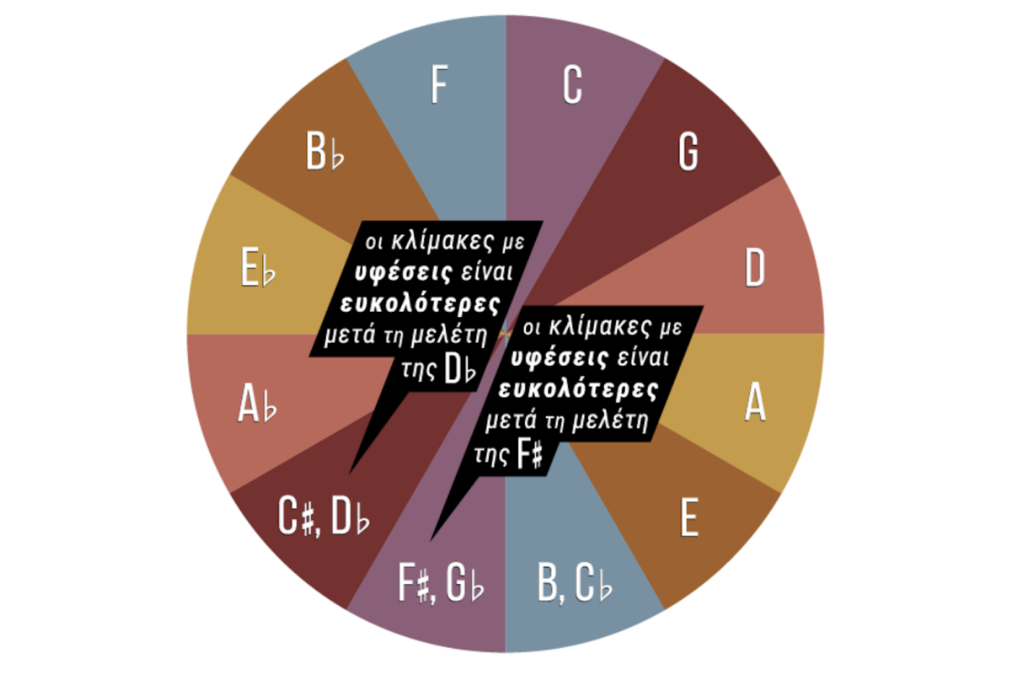
Start with two keys: F# and Db
Start with the keys of F# and Db and try to get them really solid. All the others will then feel much easier. If you start from C, every key after it will feel harder.
F# will help you approach all the scales with sharps, and Db all the scales with flats.
Use the metronome
Start with the quarter note at 60 bpm, playing sixteenth notes. Gradually move up to 100 bpm and, once you feel comfortable, go on to 120 bpm.
- Always keep your playing clean.
- Practice hands separately first, then together.
- If it gets difficult, bring the metronome down and stay there for as many days as you need.
- The metronome lets you track your progress day by day.
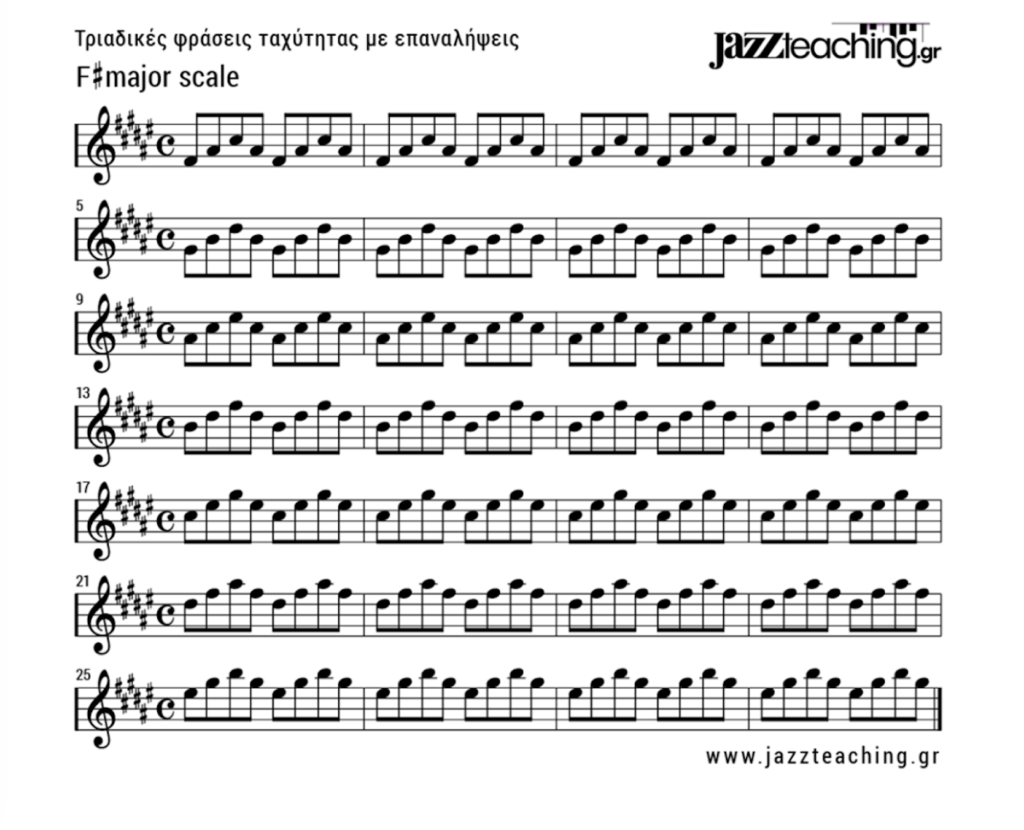
Triad patterns: great for speed and repetition
When you start practicing diatonic triads up and down, you’ll find that higher tempos get difficult. The patterns below are ideal for getting comfortable: play them with lots of repetition and as effortlessly as you can. If it’s hard, slow down and build the tempo back up gradually.
Groups of three, four and five notes
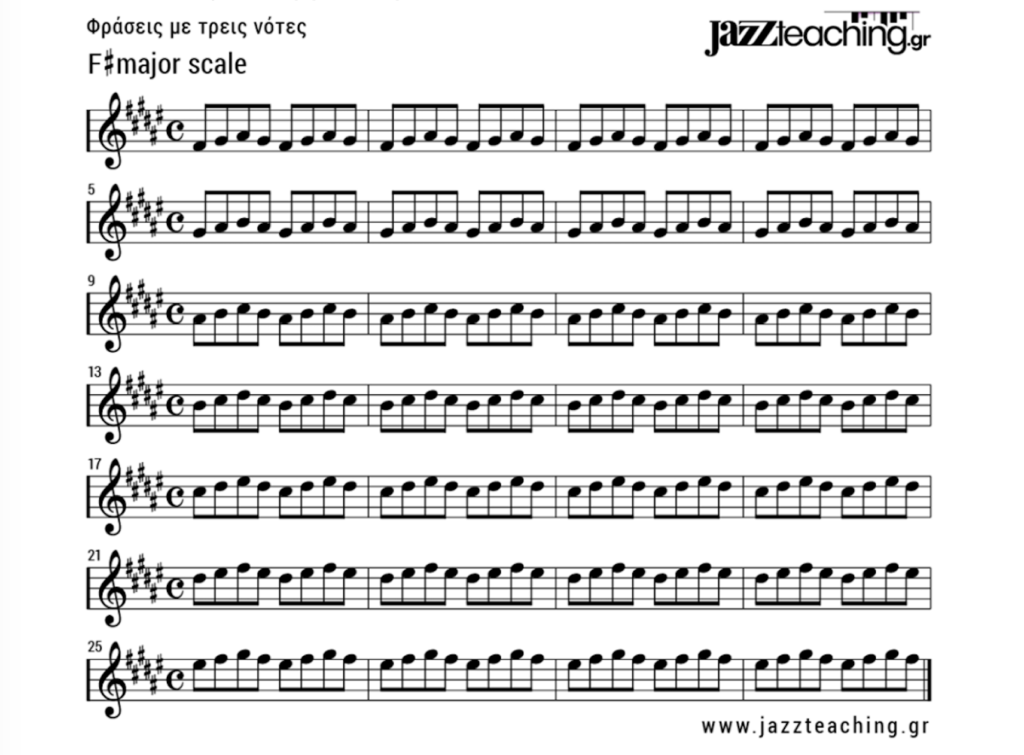
Once the triad patterns feel comfortable, move on to note groups:
- 3 notes: groups of three notes along the scale, starting from each degree.
- 4 notes: the same idea, starting from F# up to B.
- 5 notes (quintuplets): five notes per metronome click, from F# up to C#.
The whole scale without repetition, and phrasing
Once you’ve got the exercises down, try going up and down the whole scale without repetitions. It’s also very worthwhile to practice with different articulation, swing or latin, because that’s how you’ll actually use scales in your jazz improvisation. My article on jazz phrasing and articulation goes into this in more detail.
Practice without looking at the keyboard
Bring the metronome down and play the different modes without looking at the keyboard. If you make a mistake, correct it by ear, not by eye. This gives you full control and noticeably improves your ear.
To sum up: don’t forget
- Get F# and Db really solid, then work your way slowly to C.
- Start with the major scales and once they’re solid, move on to others.
- Always use a metronome.
- Practice the suggested patterns, or make up similar ones with the same logic.
- Practice with good accents to bring musicality to the exercises.
- Don’t look at the keyboard. Free yourself from it and train your ear.
- Give this practice at least a few months. The results will be remarkable.
One-on-one jazz piano lessons, online
I teach private lessons on Zoom, starting from wherever you are right now. Your first lesson is a free 60-minute trial, so we can get to know each other and see if it’s a good fit.
About the lessonsJazz Piano Newsletter
The next article, in your inbox
About once a month: new articles, practice ideas and free material on jazz piano and the Barry Harris method. No spam, one-click unsubscribe.
SubscribeChristos Mastrogiannidis
Jazz Pianist & Educator · Berklee College of Music, Kunstuniversität Graz · Founder of JazzTeaching.gr




One Comment